Explore the World
Click any country to zoom in and explore detailed statistics
Click any country to explore
What We Offer
Access to authoritative data from the world's most trusted international organizations
Get Started
Choose how you want to explore global data
Trusted Data Sources
All data is sourced from authoritative international organizations with transparent methodologies
United Nations
World Bank
UNESCO
WHO
Every fact includes inline citations with source URLs and last update dates
Trending Countries
Most viewed countries this week

The United States, located in the Americas region, spans a vast area of 9,525,067 km² and boasts a population of over 340 million, making it one of the world's most populous and influential nations. Its capital, Washington, D.C., serves as the political hub for a federal republic known for its diverse landscapes, from bustling cities to expansive national parks. With a dynamic economy (GDP data not available here), the U.S. leads in innovation, culture, and global affairs, blending opportunity with a rich history of immigration and technological advancement.
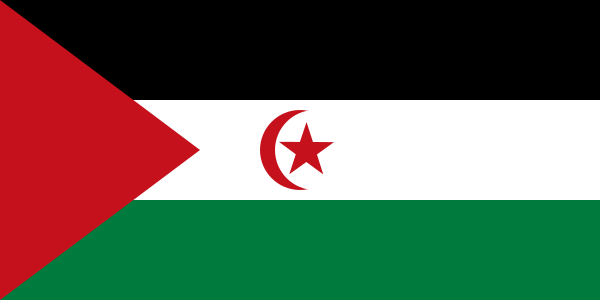
Western Sahara is a disputed territory in North Africa, largely controlled by Morocco but claimed by the Sahrawi Arab Democratic Republic, with ongoing conflicts over its sovereignty and rich phosphate resources. It spans 266,000 km², has a population of about 600,904, and its de facto capital is El Aaiún, though GDP data is unavailable due to its contested status. Despite its arid desert landscape, it's a focal point for international diplomacy and self-determination debates.
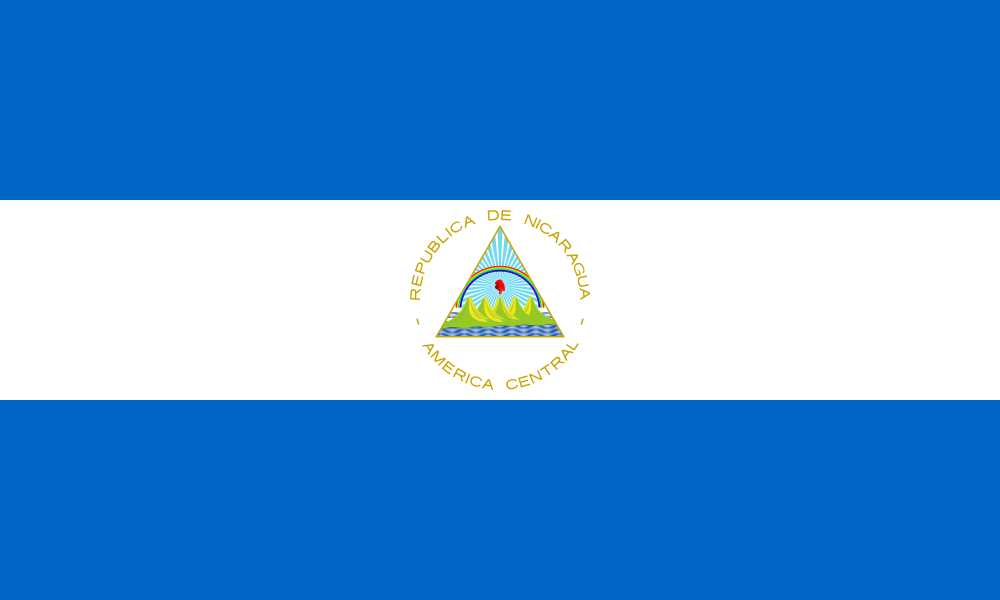
Nicaragua, a vibrant Central American nation in the Americas region, boasts a population of around 6.8 million people spread across its 130,373 km² of diverse landscapes, including volcanoes, lakes, and rainforests. Its capital, Managua, serves as the bustling economic and cultural hub, blending colonial history with modern challenges. Despite economic hurdles, the country is renowned for its natural beauty and ecotourism potential, drawing visitors to sites like Lake Nicaragua and the Corn Islands.

The Faroe Islands, an autonomous archipelago in Europe under Danish sovereignty, boasts a small population of around 54,885 residents and covers a compact area of 1,393 km². Its capital, Tórshavn, serves as the cultural and economic hub, with the economy heavily reliant on fishing and aquaculture—though specific GDP figures are unavailable. This remote Nordic gem is famed for its dramatic cliffs, puffin colonies, and resilient community thriving in the North Atlantic.
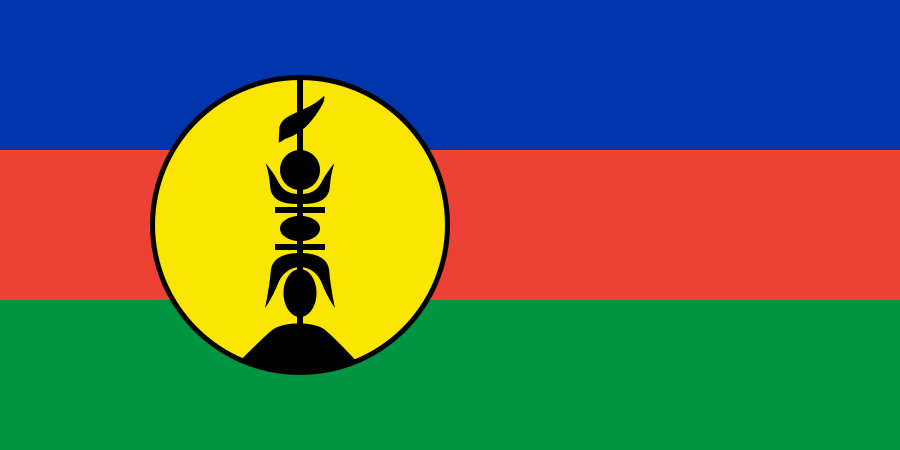
New Caledonia, a French overseas territory in Oceania, spans 18,575 km² of Pacific islands renowned for their biodiversity, lagoons, and nickel reserves—the world's largest. With a population of about 264,596 and capital in Nouméa, it boasts a diverse culture blending Melanesian, European, and Asian influences, though GDP data is not readily available due to its status. Ongoing debates over independence from France add a layer of political intrigue to this tropical paradise.